When the workshop’s stretched, safety is what quietly slips

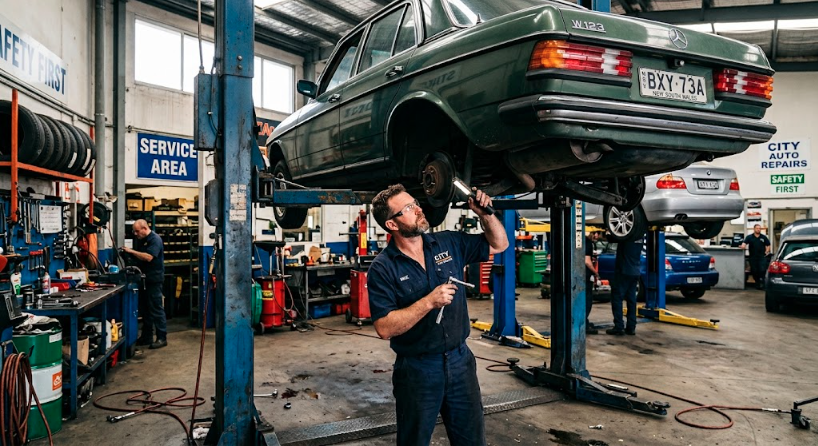
Short version: when you’re short-staffed and watching every dollar, the routine safety checks are often among the first things to slip, from the daily pre-start checks to the regular chemical register review. The workshops staying on top of it have made those checks quick and hard to forget. Three-minute read on why that matters right now.
Capricorn has just released its 2026 State of the Nation report on the automotive aftermarket, and if you run a workshop it’s worth half an hour of your time. They surveyed 989 of their members, and the picture won’t surprise anyone who’s been on the tools this year.
For the first time in the years they’ve been running the survey, cost has overtaken staffing as the biggest headache. Nearly half of businesses (49%) named price-sensitive customers and cost-of-living pressure as a key challenge, up from 42% last year. Finding good staff is right behind it at 45%. A quarter of owners said not being able to find staff is hurting their profit significantly, and 23% said they’re turning work away because of it.
Fewer people, tighter margins and customers watching every dollar. Most of you didn’t need a survey to tell you that.
What we read between the lines
The report doesn’t talk about safety. That’s fair enough, it’s a business survey and safety isn’t what it set out to measure. But we spend a lot of our time in workshops, and when we read those numbers we see something else going on.
Think about what a stretched week actually looks like. The tech who normally does the morning hoist check is off sick, so it gets done after smoko, or it doesn’t get done at all. The new starter turned up Monday and you meant to take him through a proper induction, but the booking sheet was full, so he got the five-minute version and a “yell out if you’re not sure”. The extinguisher service tag ran out in August. The chemical register was accurate about eighteen months ago.
Nobody decided any of that. No one sits down on a Monday and decides to skip safety this week. It slides a bit at a time, because every one of those jobs is the kind you can push to next week and nothing happens, right up until the day it does.
The report backs this up in a roundabout way. 41% of owners said finding time for work-life balance is a struggle, and 26% said they find it hard to balance the tools with the admin side of the business. If the owner is under a car half the day and doing quotes at night, the safety paperwork is never going to be what gets done first. And 10% said they’ve cut staff to manage costs, with others trimming hours or holding off on new hires. Same work, fewer hands.
The regulator won’t care that it was a tough year
This is the part nobody likes hearing. Your WHS obligations don’t get any smaller when business gets harder. If someone is hurt, the regulator (WorkSafe or SafeWork, depending on where you are) and your insurer will look at what you can show them on the day. Was the hoist checked? Is there a record of it? Was the injured worker inducted, and who signed off?
“We were flat out” won’t help you much in that conversation. And the cost of getting it wrong, whether that’s a fine, a premium increase, a bay shut down, or someone not going home, is a lot bigger than anything in that report about margins.
It’s a time problem
We hear the same thing in nearly every workshop we walk into. Yeah, it’s important, we know we need to get on top of it, come back to us next month. We understand why. Safety compliance has always felt like a big job you need to set a week aside for, and nobody running a workshop has a spare week.
Capricorn’s numbers on technology explain a lot of that. When owners were asked what holds them back from taking on any new system, the top answers were the time it takes to set up (45%), the cost (43%) and the time to get staff trained on it (41%). So it’s less about attitude and more about time.
The workshops we see on top of this usually have one thing in common. The routine stuff is quick, and nobody has to remember when it’s due. The hoist check takes a minute on a phone, so it gets done even in a bad week, and someone can see at a glance what’s due and what’s overdue without digging through a filing cabinet. When it’s easy it happens, and when it’s a chore it’s the first thing to go.
That’s the thinking behind AC360, and it’s why we do the setup for you. We send you a simple spreadsheet to list your sites, your gear and your people. You fill it in, we load it, set up your reminders and alerts, and send you a pack of QR stickers for every hoist and piece of equipment. So on day one you log in and your workshop is already there. There’s no new system to work out, and your team just scans the sticker and does the check. If that sounds useful, give us a call.
And if you haven’t read Capricorn’s report yet, it’s well worth a look: capricorn.coop/publications/state-of-the-nation
AutoComply360 is workplace safety compliance software built specifically for Australian and New Zealand auto workshops. It manages hoist pre-start checks, 3-monthly and annual inspection scheduling, and the full equipment compliance record — all built around AS/NZS 2550.9 and WorkSafe requirements. Technicians complete checks via QR code in minutes. Managers see compliance status across all locations in real time. The audit trail is automatic, timestamped, and ready the moment it's needed.
Book a demo with someone who actually understands workshops.


Comments